
There are so many books telling us to be strong. Books telling us to get through problems. Books telling us to harden ourselves. Books telling us that showing emotion is a sign of weakness. I believed that way of thinking once too. Many people do today.
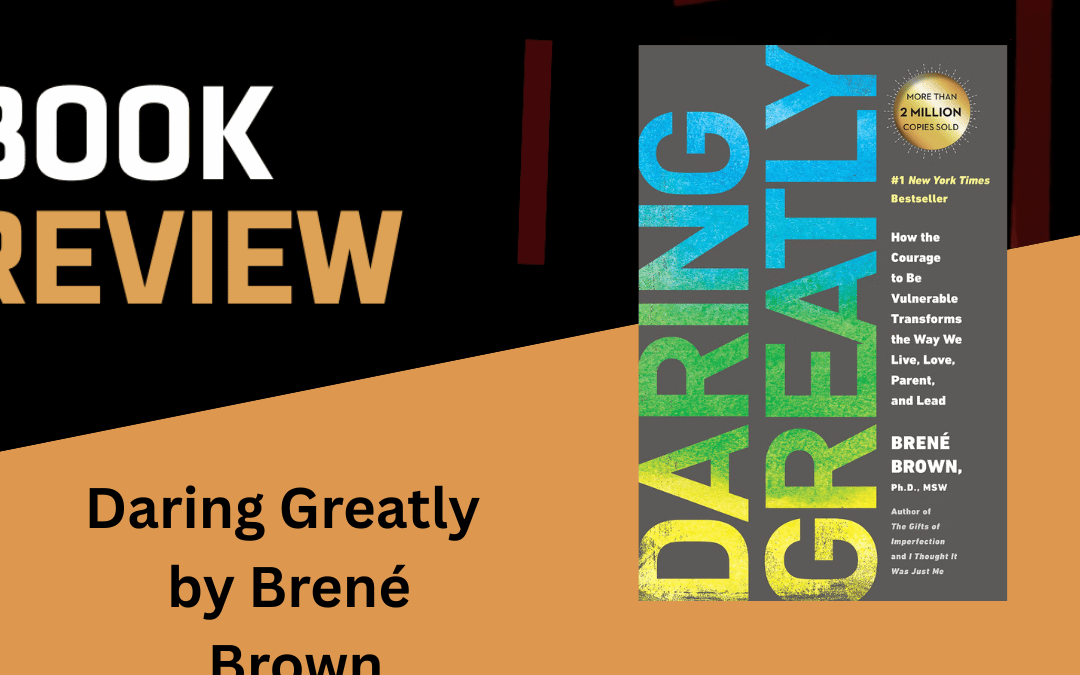
Then came “Daring Greatly” by Brené Brown.
“Daring Greatly” is a book that tells us the exact opposite. It states that vulnerability is a form of strength. It says the most courageous act we can do is to be ourselves. This seems simple. However, for many people, it is harder than running a marathon or climbing Mount Everest.
The message was surprising to me. It was new. It was true. It sounded like something we could all use to hear.
Brown has been studying courage and shame for years. She isn’t speculating. She is researching actual people with actual feelings. She learned that when we hide our feelings, we shrink. When we allow ourselves to be visible, we grow.
This book reminds us that perfection is not the ultimate goal. Perfection is an obstacle. We pretend to be perfect because we fear judgment. We fear rejection. We fear that if people knew us completely, they wouldn’t accept us. Therefore, we put on masks. We transform ourselves. We remain quiet and agreeable.
Brown says this is not living. This is merely existing.
True living takes place due to connection. Connection occurs because of openness. Openness happens through courage. Courage happens through vulnerability. It is a sequence. Each part cannot occur without the others.
I like that message. It contradicts the notion that confidence always appears to be bold. It proposes that confidence may be gentle. Confidence may be soft. Confidence may be truthful. Confidence may admit “I am not entirely sure” and still proceed.
Brown tells us about individuals that are sharing in this book as they share their own experiences with emotional openness. As well as sharing their fears and recognizing when they need help what happened was that these people made much deeper connections with others, found a sense of purpose and learned more about themselves than they ever realized existed.
There is something appealing about a self-improvement book that does not guarantee instant success. There are no easy-to-follow formulas. No specific guidelines. Simply a guide that inspires awareness and courage.
The title originates from a speech delivered by Theodore Roosevelt. He stated that the credit is given to the person in the arena. The individual who attempts. The individual who fails. The individual who continues. Brown utilizes that concept to illustrate that vulnerability is what places us within the arena. Vulnerability provides us the opportunity to attempt for something genuine.
A number of people perceive vulnerability as a loss of control. Brown perceives vulnerability as an option. We elect to be honest. We elect to care. We elect to love. We elect to attempt once again after experiencing failure. This is not weakness. This is enormous strength.
I appreciate Brown’s writing method. It feels like having a conversation with a wise friend. She judges us neither harshly nor severely. She encourages us. She leads us to believe that we possess the ability to alter.
One of the greatest concepts in the book is this. Shame diminishes when we express ourselves honestly. Silence feeds fear. When we name our feelings, we reclaim power. It is straightforward. It is effective. It feels achievable.
Additionally, this is a book that challenges how we perceive others. When someone responds irrationally, we commonly assume that they are either angry or impolite. Brown asks us to consider the possibility that maybe they are terrified. Possibly they are wounded. Possibly they are defending themselves.
Curiosity generates compassion.
The book also discusses how scarcity influences our thought processes. We fear that there is insufficient success. We fear there is insufficient love. We fear there is insufficient approval. Thus, we compete. We compare. We conceal our weaknesses.
We defend our pride. Brown advises us to modify our mindset. There is sufficient room for each person to succeed.
I believe that concept alters everything.
There is a segment of the book dedicated to parents that stood out to me. She states that children develop an understanding of how to be vulnerable based on how adults behave. If we conceal our emotions, children will conceal their own emotions. If we demonstrate courage by behaving authentically, children will develop confidence from witnessing our behavior.
That appears to be crucial. It grants every parent authorization to be human. To reveal to their children that making errors is typical. To show that personal growth results from honesty rather than perfection.
Using examples from your workplace can be beneficial as well. Executives often think you have to show no uncertainty in order to have authority. Brown states that leaders who express what they are uncertain about will establish trust. When leaders are vulnerable, it shows that everyone involved in this work will collaborate to reach the goal of making progress. A team is made stronger when every member feels important and valued and each member is asked for ideas or solutions on how to make things better.
I concur. When people feel secure to express themselves, creative potential and problem-solving abilities increase. Security promotes efficiency; fear does not.
Some individuals may fear that embracing vulnerability will result in losing respect. Brown demonstrates the opposite. Authenticity fosters respect; pretenses never do.
This book provided me with a single distinct message. Concealing oneself is tiring. Attempting to present as flawless is tiresome. We receive nothing from attempting to appear flawless. However, when we acknowledge who we are, we experience less weight. We experience greater bravery. We experience a sense of unity.
We require more people in the globe who are prepared to be authentic. More people who are willing to lead with humanity. More people who are prepared to “dare greatly.”
When you obtain this book, you may initially feel uneasy. That is evidence that you are prepared to develop. You may begin to pay attention to instances where you remain quiet. You may observe when you hold back a query or a compliment. Brown recommends moving slightly beyond that boundary. Make a tiny honest gesture. Another.
Bravery develops like a muscle. Gradually. Steadily. With pride.
“Daring Greatly” is a book for anybody who wishes to operate in life without fear controlling the steering wheel. It is not about loud courage. It is about quiet genuineness.
It inspires us to enter the arena. To raise our hand. To voice our thoughts. To genuinely care. To take risks by being visible.
And to experience the satisfaction of living fully.
In a world filled with edits and filters, this message is bold. It is courageous. It is correct.
