
Most of us are taught to do more. Say yes more often. Take every opportunity. Stay busy. Stay visible. Somewhere along the way, being overwhelmed started to feel like a sign that we are doing something right.
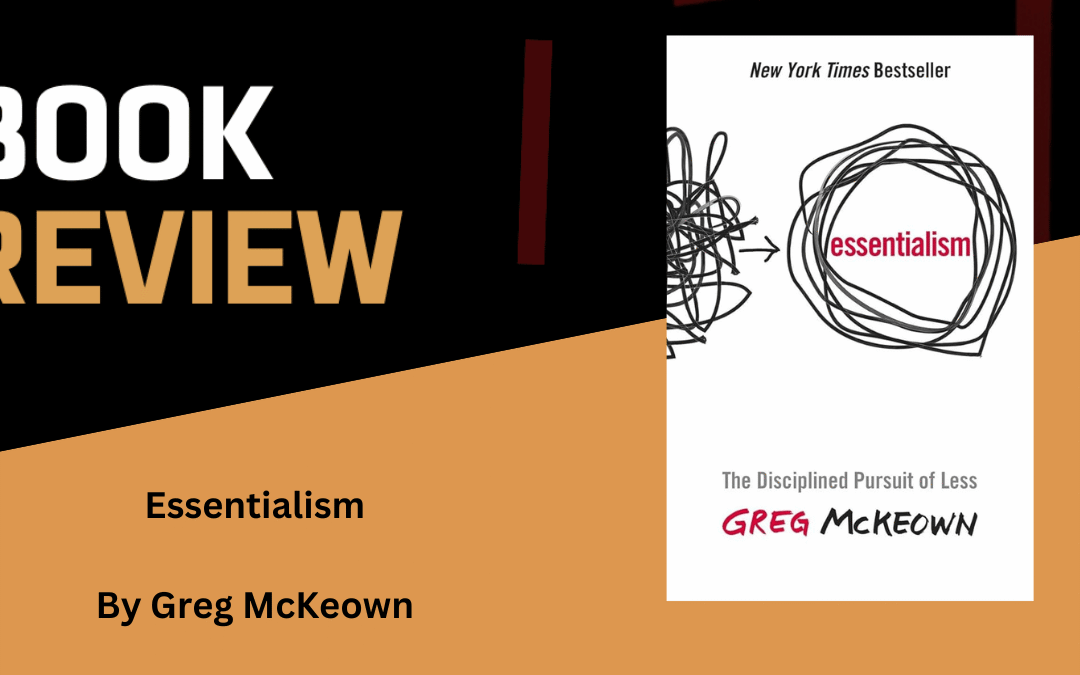
Greg McKeown challenges that idea in Essentialism: The Disciplined Pursuit of Less. His message is simple. Do less, but do it better.
That sounds obvious. Almost too obvious. However, living it is not that simple.
At the heart of the book is one clear principle. Not everything is important.
McKeown argues that only a small number of things truly matter. The rest are distractions that look like opportunities. The essentialist learns to pause, filter, and choose deliberately instead of reacting automatically.
What I appreciate most about Essentialism is its clarity. The idea feels like a genuine relief. There is something powerful about giving yourself permission to stop trying to do everything.
At the same time, life is rarely that simple.
Responsibilities overlap. Expectations do not disappear just because you decide to focus. Saying no can be much harder than the book makes it sound.
One of the strongest parts of the book is how clearly it shows why people say yes so easily.
We say yes to avoid friction.
We say yes to seem helpful.
We say yes because declining feels awkward.
McKeown’s focus on being selective makes sense. Still, putting it into practice is difficult. Saying no often disappoints people. It can also change how they see you. That is not a small shift.
The book acknowledges this. Even so, it sometimes makes the transition feel smoother than it usually is in real life.
The phrase less but better is what stays with most readers. It is simple, but it carries weight.
The goal is not to care less. The goal is to direct your effort more wisely. It is about focusing your energy on fewer things so you can give them more attention and care.
That is where the book becomes useful.
Even applying a small part of this idea can bring quick clarity. Decisions feel easier. Work feels more purposeful. Life feels a little less scattered.
Still, the process requires honesty. You have to decide what truly matters. That is not always easy.
Essentialism is also about slowing down. It asks readers to think before acting. That sounds simple, yet it goes against the pace of modern life.
In a world that rewards speed, slowing down can feel wrong. We are trained to react fast. We answer messages quickly. We treat every request as urgent. Because of that, creating space before saying yes can feel uncomfortable, even when it is the wiser move.
That tension is real. Slowing down can feel like falling behind.
My own experience with the book made that clear.
When I first read Essentialism, I thought I understood it right away. The message felt straightforward. But once I tried to apply it, I noticed how automatic many of my habits were. I said yes without thinking. I filled my time without asking why.
I did not change everything overnight.
What changed was smaller.
I started pausing.
I started questioning where my time was going.
Sometimes, I chose differently.
That was enough to make a difference.
My view is this: you do not need to follow this book perfectly for it to be useful.
That may be the most encouraging part of it. Essentialism is not really about doing less in a strict or rigid way. It is about becoming more aware of what deserves your time.
That is also where I take a slightly contrarian but positive view of the book. I do not think its greatest value is productivity. I think its greatest value is permission. It gives readers permission to stop treating every request, goal, or option as equally important.
That matters more than another time management system.
Real life is messy. You will still overcommit. You will still make choices that do not fully align with your priorities. The value of the book is not perfection. The value is awareness.
Once you become more aware, your choices begin to shift. Maybe not all at once. Maybe not dramatically. But they do shift.
Essentialism is not a loud book. It does not promise a total life overhaul. Instead, it offers a simple idea that takes time to understand fully.
Not everything deserves your attention.
I would not treat this book as a rulebook. I would treat it as a reminder.
You may not do less overnight. However, you may start choosing better. And that is where the real value lies.
For more reflections, visit the journal, browse other publications, or explore more book reviews such as 12 Rules for Life, Buy Back Your Time, The Lost Bookshop, Never Split the Difference, Greed Is God, Can’t Hurt Me, The Power of Now, and All the Ugly and Wonderful Things. You can also learn more on the biography page or return to the homepage.
