
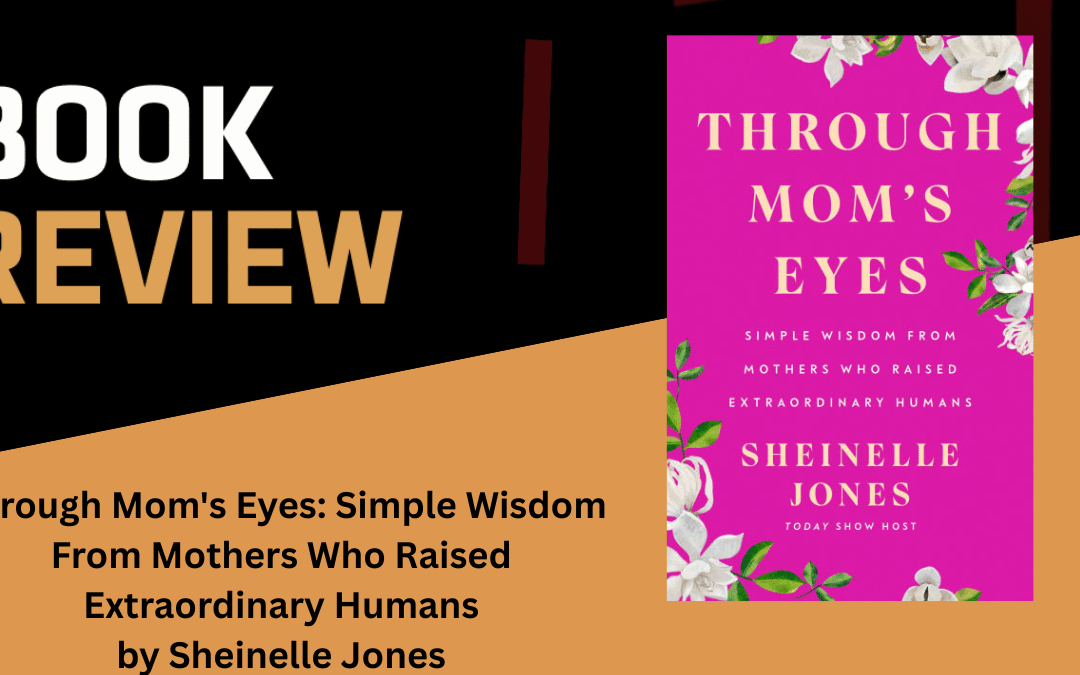
Most parenting books try to comfort you with reassurance first.
This one takes a better path.
That is exactly why Through Mom’s Eyes: Simple Wisdom From Mothers Who Raised Extraordinary Humans stands out.
Written by Sheinelle Jones, the book looks at motherhood from a refreshing angle. Instead of turning famous success stories into polished myths, it brings the focus back to the women who helped shape those lives in the first place. That choice gives the book warmth. It also gives it purpose. Rather than offering flashy parenting hacks, it shares simple values that still matter.
My view is simple. This is not a book about raising perfect children. It is a book about raising grounded human beings.
That is a big reason I respect it.
Many books about parenting try too hard to sound expert. They lean on formulas, rules, and checklists. This one feels more personal. More human. It does not pretend that one parenting method works for everyone. Instead, it highlights the steady habits, beliefs, and daily choices that helped mothers guide children who later became remarkable in their own way.
That approach works well.
A more contrarian point is this. I do not think the best parenting books are the ones packed with techniques. I think the best ones remind us of truths we already know but often forget. Be present. Pay attention. Teach values early. Let children grow into themselves. Through Mom’s Eyes leans into that kind of wisdom, and that is what gives it staying power.
At first, the title might make some readers think the book is only about extraordinary achievement. That can sound intimidating. It can even sound a little glossy. However, the real strength of the book is not in celebrating fame. It is in showing how love, consistency, and belief can shape a child over time.
That is a much stronger message.
Sheinelle Jones also makes a smart choice by letting mothers remain at the center of the story. Many books about public success focus almost entirely on the person who became famous. This one asks a better question. What kind of care, discipline, encouragement, and perspective helped that person grow?
That question is more useful to readers.
It also makes the book feel more grounded. Yes, the families in the book may be connected to famous names. Still, the lessons do not feel exclusive. They feel universal. Presence matters. Confidence matters. Responsibility matters. Emotional support matters. Those are not celebrity values. They are human values.
I found that refreshing.
In today’s world, parenting advice often swings too far in one direction. Some books are so soft that they become vague. Others are so rigid that they forget children are people, not projects. This book seems to land in a healthier middle ground. It respects warmth, but it does not ignore discipline. It celebrates care, but it does not turn motherhood into performance.
That balance gives it credibility.
Another reason I like the book is that it values everyday influence over dramatic moments. That may sound obvious, but many readers still get pulled toward big ideas and major breakthroughs. Real parenting usually does not work that way. It happens in routines. In repeated words. In quiet examples. In the tone children hear every day. This book seems to understand that.
That makes it more believable.
I also appreciate that the wisdom here appears simple without feeling shallow. That is harder to do than most people think. Simple writing is often mistaken for basic thinking. In truth, the clearest ideas are usually the hardest to express well. This book appears to offer guidance in a way that feels accessible and sincere.
That matters.
Here is another contrarian opinion. I do not think parents always need more information. I think many of them need more confidence in the values that already matter most. Modern culture pushes parents to optimize everything. Sleep schedules. Activities. Milestones. Performance. Meanwhile, children still need many of the same things they always did. Love. Stability. Boundaries. Encouragement. Time.
This book seems to return to that truth.
Because of that, it may resonate with readers who feel tired of parenting advice that sounds polished but distant. It offers a more lived in kind of wisdom. It feels less like a lecture and more like a conversation. That tone makes a difference. Readers are far more likely to trust a book that sounds honest than one that sounds overly packaged.
Of course, not every reader will want the same thing. Someone looking for a strict step by step parenting manual may find this approach less direct. This is not a book that seems built around hard rules. It is more reflective than prescriptive. For me, that is a strength, not a weakness.
I would rather read a thoughtful book that leaves room for judgment than a rigid one that acts like family life can be solved with a formula.
That is another reason this book stands out.
My final take is positive.
Through Mom’s Eyes works because it chooses wisdom over hype. It reminds readers that raising strong, kind, capable people usually starts with small things done well and done often. It does not glorify perfection. It values consistency. It does not chase grand theories. It returns to steady truths.
That is exactly what many readers need.
For parents, caregivers, and readers who value books with heart, this one offers something real. It suggests that extraordinary humans are not shaped by pressure alone. They are shaped by love, patience, standards, and someone who keeps showing up.
That message is simple.
It is also powerful.
And in a culture that often makes parenting feel like a contest, that may be the wisest thing about it.
For more reflections, visit the journal, browse other publications, or explore more book reviews such as The Courage to Be Disliked, Essentialism, The 80/20 Principle, 12 Rules for Life, Buy Back Your Time, The Lost Bookshop, Never Split the Difference, Greed Is God, Can’t Hurt Me, The Power of Now, and All the Ugly and Wonderful Things. You can also learn more on the biography page or return to the homepage.
